
Book Shrink Packaging
Book shrink packaging is essential for publishers, printing factories, retailers, and wholesalers as it ensures protection during storage, transportation, and handling. It shields books from dust, moisture, and physical damage while maintaining their pristine condition. The clear, tight-fitting film enhances presentation, allowing covers to be easily viewed and appealing to customers.
Among book shrink packaging films, polyolefin shrink film provides the best choice and advantages. Polyolefin shrink film offers tamper-evident security, prevents theft, and is cost-effective for high-volume production. This makes it an efficient and professional packaging solution across the entire book supply chain.
Why Choose Polyolefin Shrink Film for Books?
Polyolefin shrink film, or POF shrink film, is becoming increasingly popular in the publishing and retail industries due to its superior performance and protective qualities. Here’s why polyolefin shrink film is an ideal solution for book packaging:
1. Protect Books Against Environmental Elements
- Dust & Dirt: Shrink wrap film forms a tight, secure seal around the book, keeping dust, dirt, and other contaminants from damaging the surface.
- Moisture & Humidity: The shrink film is moisture-resistant, providing protection from humidity or unexpected spills, which could otherwise damage delicate paper.
2. Bundling & Multi-Pack Books
- Shrink wrap polyolefin film allows books to be bundled together for special promotions or bulk sales, making it easy to package multiple copies of the same book or a set of books.
- By using shrink wrap film, publishers and retailers can create attractive, cohesive packaging for a variety of titles.
3. Durable Packaging Secure Books
- Polyolefin shrink film is highly durable and resilient, helping to protect the book from physical damage such as scratches, creases, or bends during storage and transportation.
4. Enhanced Book Presentation
- Shrink-wrapped books often look more polished and professional, enhancing their shelf appeal and presentation.
- Shrink wrap also offers an opportunity to brand the packaging with logos, tags, or special promotional stickers.
5. Tamper-Evident Feature
- Shrink-wrapped books are tamper-evident, meaning that if the packaging is damaged or opened, it’s immediately noticeable. This adds an extra layer of security to prevent theft or unwanted alterations.
How to Shrink Wrap Books?
The shrink wrap process for book packaging using polyolefin shrink film involves several key steps. First, the book is placed in a sheet of polyolefin film. Using a shrink wrapping machine, the film is sealed around the book, typically with a heated bar or L-sealer. After sealing, the wrapped book is passed through a heat tunnel, where the polyolefin film shrinks tightly around the book, forming a protective, tamper-evident layer. The following are heat shrink packaging machines for book packaging, and for print finishing.
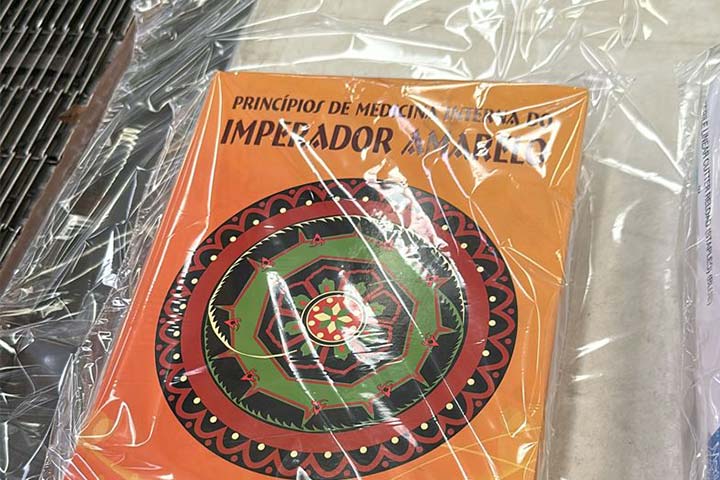
Book Manual Shrink Wrapping
The operator manually wraps the book in shrink film, then uses a heat gun or tunnel to shrink the film.
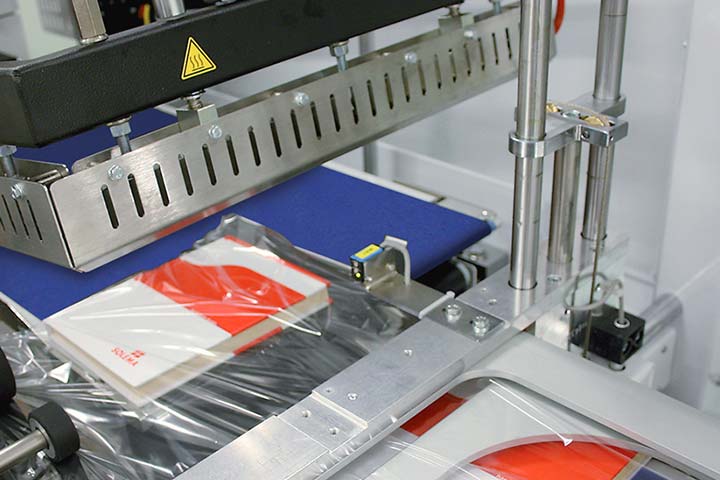
Book L-Sealer Packaging
The book is placed in shrink film, and the L-sealer uses a heated bar to seal the plastic around the book in an “L” shape. The wrapped book then enters a heat tunnel for shrinking.
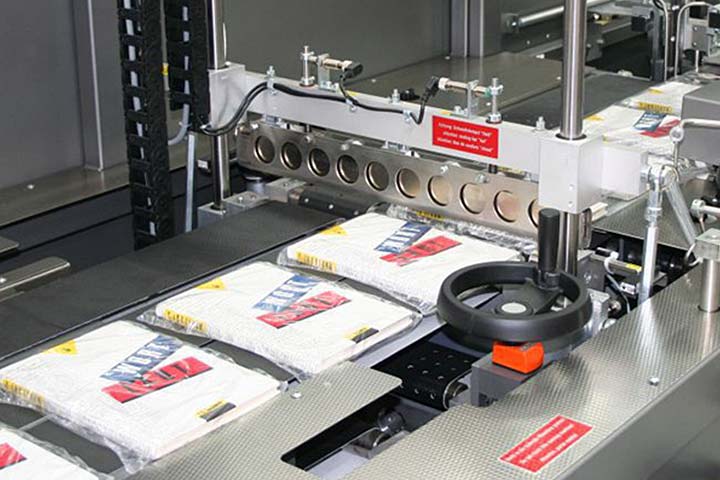
Book Automatic Shrink Packaging
These fully automated systems feed, seal, and shrink the film around books with minimal operator input, offering high efficiency and speed for large volumes.
Book Shrink Wrapping Process Troubleshooting
Shrink wrapping books is a common packaging method that helps protect and preserve them, but it often presents several challenges during the process. Common issues include wrinkles radiating from the corners of over-wrapped books, triangular projections of shrink film on books, and unwanted plastic residue on the surface of the books. These problems typically arise due to low shrink ratio, poor heat sealing, or incorrect film thickness. Such issues can compromise the appearance of the package and the quality of the wrapping. Understanding the causes of these problems and implementing corrective measures is essential to achieve a smooth, professional shrink wrap finish for books.
Book Shrink Packaging Wrinkles
After shrink packaging, wrinkles appear radiating out from the corner of the over-wrapped book.
Causes and Solutions:
-
- Insufficient Film Shrink Ratio
Cause: The shrink film’s ratio is not adequate.
Solution: Switch to a polyolefin shrink film with a higher shrinkage rate. - Sealing Line Defects
Cause: The sealing line has breaks and is not sealing properly, which allows air inside the package to escape, not through the perforated holes, but through the broken sealing line.
Solution: Switch to a polyolefin shrink film with a higher seal strength.
- Insufficient Film Shrink Ratio

Book Shrink Film Bulge
After shrink wrapping, the excess shrink film in the corners of the book forms triangular projections.
Causes and Solutions:
-
- Insufficient Film Shrink Ratio
Cause: The film shrinkage is not enough. Polyolefin heat shrinkable film, depending on its formulation, has a heat shrinkage of 50% to 75% at 120 degrees Celsius. Films with low shrinkage will cause this problem.
Solution: Switch to a polyolefin shrink film with a higher shrinkage rate. - Improper Film Size
Cause: The shrink film that is too large for the book, excess material will gather around the edges and corners.
Solution: Minimizing excess shrink film around the edges before book shrinking.
- Insufficient Film Shrink Ratio
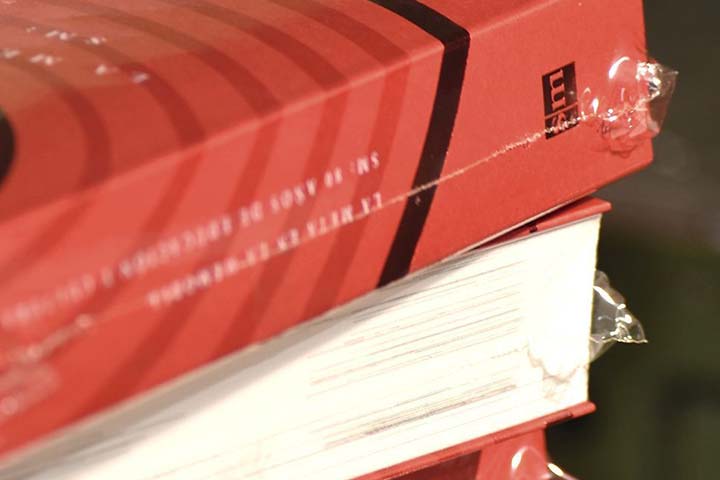
Plastic Residue After Book Heat Shrinking
It refers to the leftover thick shrink film that sticks to a book’s sealing line after the shrink-wrapping process.
Causes and Solutions:
-
- Shrink Film Is Overheated
Cause: The sealing knife or sealing blade has a higher temperature setting than the film requires.
Solution: Reduce the temperature of the sealing knife. - Improper Film Thickness
Cause: Book heat shrink packaging, as well as multiple book packaging, usually use 15 micron or 19 micron polyolefin heat shrink film. If thicker film is used, this problem will occur.
Solution: Use thiner shrink film for book shrinking.
- Shrink Film Is Overheated
